
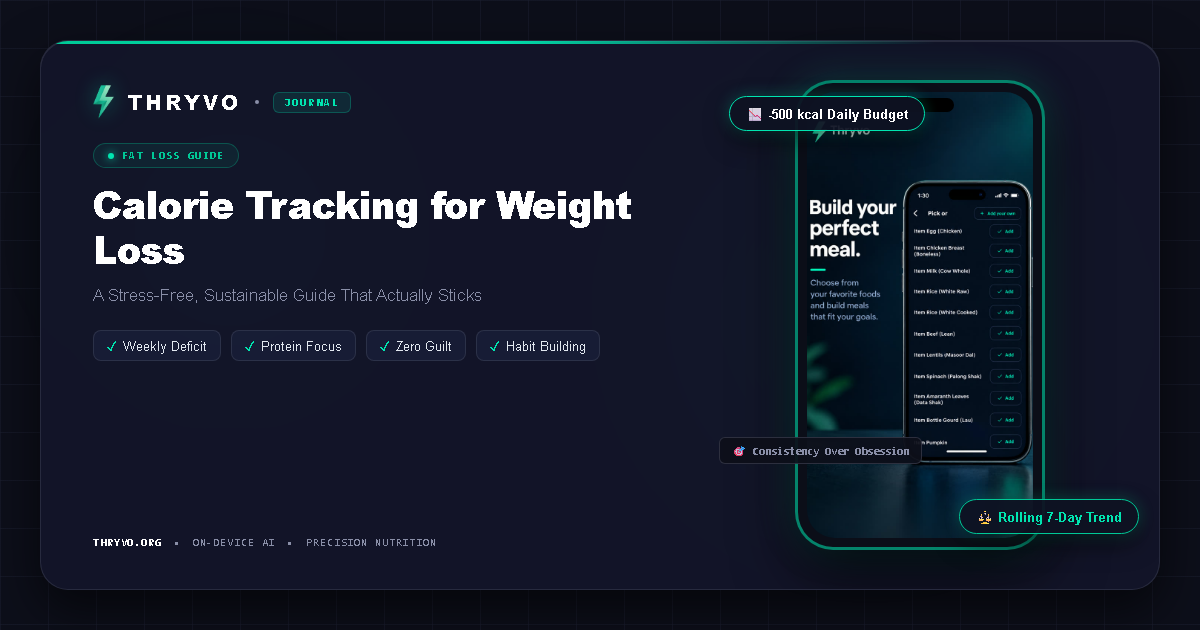
A calorie tracker for weight loss can be useful because it turns an invisible daily pattern into something you can review. But calorie tracking works best when it supports a sustainable routine rather than becoming a test you have to pass perfectly every day.
Food labels, restaurant nutrition data, portion estimates, and wearable calorie-burn numbers all contain uncertainty. The goal is therefore not perfect arithmetic. It is to build enough consistency to understand trends.
Start with a reasonable target, not an aggressive one
Weight change is influenced by energy intake and expenditure, but setting a target involves personal factors such as body size, activity, age, training, medications, and health conditions. Generic app calculations can provide a starting estimate, not individualized medical advice.
If you have a medical condition, history of disordered eating, are pregnant, or need a therapeutic diet, work with an appropriately qualified health professional before using calorie restriction as a strategy.
Why logging consistency matters
Imagine two approaches. In the first, every gram is measured perfectly for two days and then tracking stops. In the second, meals are logged with reasonable estimates for several weeks. For trend awareness, the second approach is often more informative because it creates enough data to compare patterns.
AI photo logging can reduce the friction involved in that second approach. A meal photo can create a starting estimate that the user edits when needed.
Use weekly trends instead of reacting to one day
Daily body weight can move because of water, sodium, carbohydrate intake, digestion, and other factors. One day of intake can also differ for perfectly ordinary reasons.
Look at longer trends rather than treating a single day as success or failure. The same principle applies to calorie estimates: consistent methodology matters more than believing every number is exact.
Protein and food quality still matter
A calorie target is not a complete nutrition plan. Protein may be important for people who are strength training or trying to maintain lean mass during weight loss. Fiber, fruits, vegetables, and overall dietary quality also matter for health and satiety.
A useful app therefore makes macros visible without turning the dashboard into an overwhelming spreadsheet.
Where photo calorie tracking helps
Photo logging can be especially useful for meals with several visible components. Instead of searching each food separately, the app can identify likely items and create an editable estimate.
Use the estimate as a draft. Add hidden oils, sauces, drinks, or ingredients the camera cannot detect. Adjust the portion when the visual guess is clearly wrong.
Avoid chasing false precision
A display that says “612 calories” may look precise, but the meal itself may not be measured precisely. A restaurant portion may vary from the recipe standard. A spoonful of dressing may be larger than expected. A photo may underestimate a dense food.
It is better to think in terms of useful estimates and trend consistency.
Build a routine that takes less than two minutes
A sustainable workflow might be:
- Photograph or log the meal.
- Review the identified foods.
- Correct obvious portion errors.
- Add hidden extras if they are meaningful.
- Move on with your day.
At the end of the week, review the overall pattern rather than micromanaging every entry.
How Thryvo approaches tracking
Thryvo says its planned free app will combine food photo scanning, calorie and macro tracking, water tracking, workouts, and progress features. The free-forever model may be useful for people who want to build a long-term habit without making the decision depend on a subscription.
Frequently asked questions
Do I have to count calories to lose weight?
No. Some people prefer portion-based approaches, structured meal plans, or other methods. Calorie tracking is one tool for increasing awareness.
Are calorie tracker estimates exact?
No. Nutrition labels, recipes, portions, restaurant data, and AI estimates all contain uncertainty.
How often should I review progress?
Longer trends are generally more informative than reacting to one meal or one day. The exact review schedule depends on your goal and whether tracking remains helpful.
Bottom line
A calorie tracker for weight loss should make the process easier, not more stressful. Use the numbers as estimates, focus on repeatable habits, review trends over time, and keep the tracking workflow simple enough to maintain.
Thryvo is developing a free-forever AI fitness app with photo food logging, macros, workouts, water tracking, and progress tools.
Sources and editorial notes
- Thryvo Support: https://thryvo.org/support.html (free-forever positioning, planned device support, on-device posture processing)
- Thryvo: https://thryvo.org/
- MyFitnessPal Free/Premium/Premium+ comparison: https://support.myfitnesspal.com/hc/en-us/articles/34889191368077-The-difference-between-Free-Premium-and-Premium
- MyFitnessPal Meal Scanner: https://support.myfitnesspal.com/hc/en-us/articles/360045761612-How-to-use-the-Meal-Scanner
- MyFitnessPal Barcode Scanner: https://support.myfitnesspal.com/hc/en-us/articles/360032624771-How-to-use-the-Barcode-Scanner
- Cal AI App Store listing: https://apps.apple.com/us/app/cal-ai-calorie-tracker/id6480417616
Health note: This article is educational and is not medical or individualized nutrition advice. AI food estimates, app calculations, and camera-based form feedback can be imperfect.