
Consistent nutrition tracking is the single most predictive factor in achieving long-term body composition goals. Yet traditional calorie counting apps fail because manual logging creates high cognitive friction.
When logging a single meal requires searching through tens of thousands of inaccurate community database entries and manually weighing individual ingredients, adherence drops sharply after the first two weeks.
Why Friction Kills Nutrition Habits
The core problem with manual calorie tracking is not motivation—it is convenience. Modern lifestyle demands speed and simplicity:
- Decision fatigue: Searching databases for complex multi-ingredient recipes takes time.
- Social friction: Weighing meals on a digital kitchen scale while dining out or with friends is impractical.
- All-or-nothing mindset: Missing a single meal log often cascades into abandoning tracking entirely.
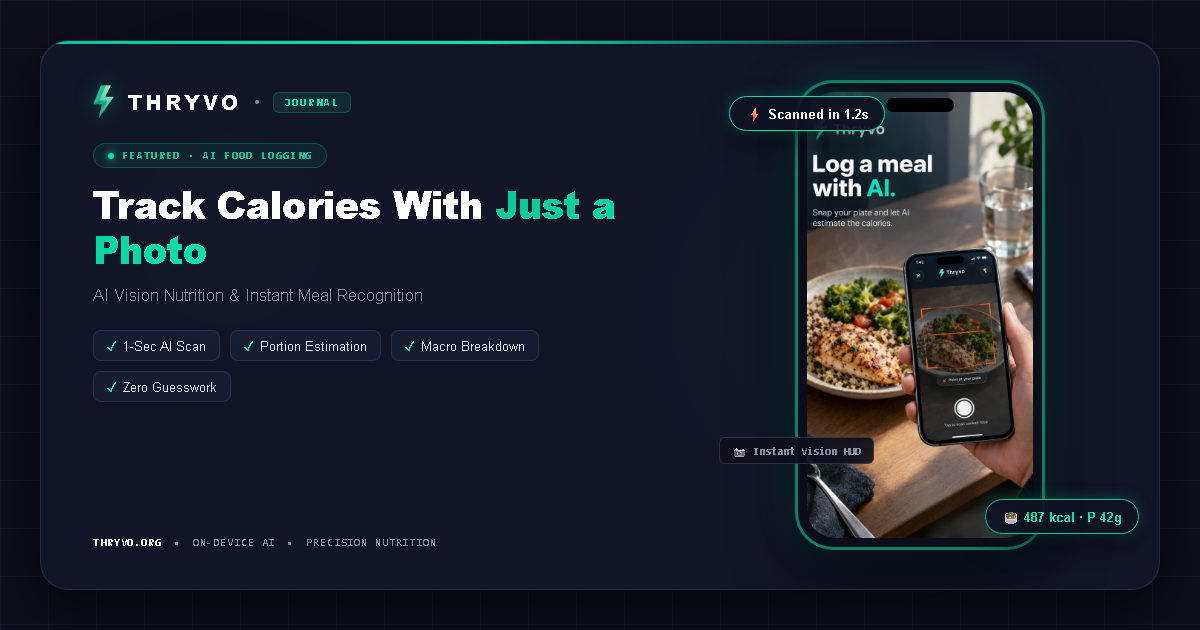
By utilizing on-device artificial intelligence to analyze meal photos in seconds, frictionless logging preserves mental bandwidth while delivering actionable macro estimates.
How Photo-Based AI Tracking Solves the Consistency Problem
When you take a photo of your plate, computer vision models identify each component, cross-reference portion density, and estimate macronutrients instantly:
- Visual segmentation: Detects protein sources, complex carbohydrates, vegetables, and fats.
- Portion estimation: Uses reference cues and container depth to calculate gram weights.
- Instant macro breakdown: Displays protein, carbohydrate, fat, and total calorie targets within three seconds.
3 Rules for Sustainable Nutritional Progress
Achieving your fitness goals does not require weighing every leaf of spinach. Focus on these foundational principles:
- Prioritize daily protein targets: Aim for 1.6 to 2.2 grams of protein per kilogram of body weight to support lean muscle retention.
- Track 7-day rolling averages: Weight fluctuates daily due to water retention and glycogen stores. Weekly averages provide true metabolic signal.
- Aim for 80% consistency: Adhering to your calorie budget 80% of the time produces 95% of the aesthetic and physiological results.
Frequently asked questions
Is AI photo food tracking accurate enough for fat loss?
Yes. For fat loss and muscle gain, consistent approximate tracking (within 5-10% of actual caloric intake) combined with regular weigh-ins produces identical real-world results to obsessive gram-by-gram weighing.
Does photo food scanning work when dining out?
Yes. Photo recognition models identify common restaurant preparations, mixed bowls, pasta dishes, and salads without requiring ingredient-by-ingredient barcode scanning.
How does Thryvo protect meal photo privacy?
Thryvo processes vision and food recognition models locally on your device. Meal images are never transmitted or stored on remote cloud servers.